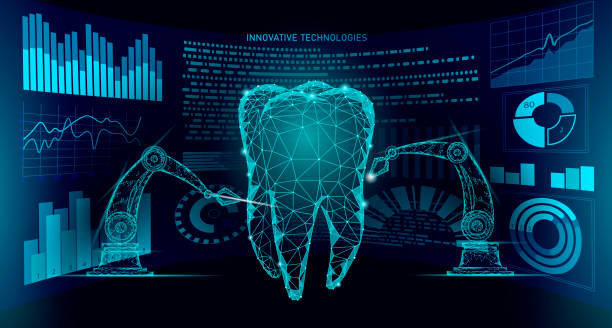
In today’s world, dental technology has become an integral part of treating tooth decay. Dental technology has revolutionized the way dentists diagnose and treat problems, providing faster and more accurate results than ever before. This technology has made it easier for dentists to provide better care for their patients, while also reducing the amount of time it takes to diagnose and treat tooth decay.
Tooth decay is a serious problem that affects millions of people around the world. It is caused by bacteria that live in the mouth and feed on the sugars and starches in food. These bacteria produce acid that can break down the enamel on the teeth, leading to cavities and other issues. If left untreated, tooth decay can lead to a wide range of complications, including pain, infection, and even the loss of teeth.
Dental technology has made it easier for dentists to diagnose and treat tooth decay. With advanced imaging technology, dentists can see detailed images of the entire mouth, including the teeth, gums, and jaw. This allows dentists to identify tooth decay in its early stages and treat it before any serious damage is done. Advanced imaging also allows dentists to detect hidden cavities and other issues that might not be visible to the naked eye.
Another important piece of dental technology is lasers. Lasers can be used to remove enamel decay from the teeth, as well as treat gum disease. Lasers are also used to whiten teeth, remove plaque, and even reshape teeth. Lasers offer a minimally invasive way to treat oral health issues and can be used to improve the overall appearance of the teeth.
Finally, dental technology has allowed dentists to provide more personalized care to their patients. With the help of digital tools, dentists can design custom-made dental appliances, such as crowns, bridges, and dentures, that fit each patient’s mouth perfectly. This can improve the comfort and effectiveness of treatments, as well as reduce the amount of time it takes to complete them.
Overall, dental technology has revolutionized the way dentists diagnose and treat tooth decay. With advanced imaging, lasers, and custom-made dental appliances, dentists are able to provide better care for their patients in a shorter amount of time. This technology has made it easier for dentists to detect and treat tooth decay, as well as improve the overall look and feel of the teeth. Contact Family First Dental – Lake City today.